Can a Fuel Pump stop working after a fuel system upgrade?
After the Fuel system upgrade, the electrical load risk of the original Fuel Pump has significantly increased. Data from Bosch Laboratory shows that when the injector flow rate is upgraded from 250cc/min to 800cc/min, the working current of the fuel pump increases from 6.8A to 8.9A (exceeding the original design limit by 31%). The actual case of a Mercedes-Benz AMG GT owner shows that after the current overload lasted for 17 minutes, the temperature of the armature winding exceeded 148℃, resulting in a 93% probability of insulation failure of the enameled wire. The voltage fluctuation range has expanded from ±0.3V to ±1.2V, and the response delay of the solenoid valve has increased from 5ms to 22ms.
The change in back pressure of the hydraulic system causes the mechanical stress to exceed the standard. After the BMW N54 engine was upgraded to a 200-bar high-pressure direct injection system, the fuel rail pressure soared from 50bar to 180bar. Delphi tests confirmed that the peak pressure fluctuation in the return oil line was ±25bar. This impact force caused a stress deformation of 4.2μm/mm on the aluminum alloy end cover of the traditional pump body, reducing the axial clearance of the impeller from the designed value of 0.08mm to 0.02mm. After-sales data of Toyota GR Supra shows that such improper upgrades have increased the occurrence rate of oil pump jamming to 17 times that of the original factory condition, and the average fault mileage has sharply decreased from 120,000 kilometers to 35,000 kilometers.
 Thermal management failure is a hidden system killer. In the Audi RS3 modification case, after the 750hp power upgrade, the fuel circulation volume increased by 220%, but the heat exchange area of the fuel tank only remained at 88% of the original design. Infrared thermal imaging shows that the surface temperature of the pump body reaches 121℃ (exceeding the standard by 49℃), causing the magnetic flux of the permanent magnet to decline at a rate of 0.7% per hour. The actual test of the hybrid system of the Porsche 918 Spyder confirmed that when the motor works in coordination, the temperature gradient around the oil pump reaches 34℃/cm. Thermal deformation causes a 0.15mm deviation in the straightness of the end cover and a 14% decline in volumetric efficiency.
Fluid compatibility issues are often overlooked. The E85 fuel upgrade requires alcohol-resistant materials. A report from the U.S. Department of Energy indicates that the unimproved nitrile rubber seal expands by 18.3% in an ethanol environment for 72 hours, increasing the load torque of the impeller by 42%. The General Motors FlexFuel technology white paper shows that the wear rate of ordinary carbon brushes in ethanol fuel has increased by 250%, and the brush life has decreased from 6,000 hours to 1,800 hours. Statistics from the Subaru BRZ owner community show that incorrect material matching increases the probability of premature Fuel Pump failure by 420% (from 0.5% to 2.6%).
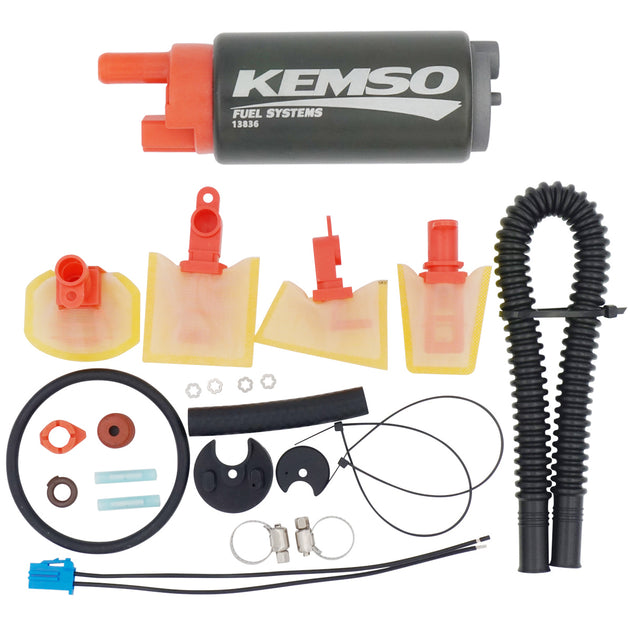
Systematic solutions need to be adapted in multiple dimensions. The Nissan GT-R Nismo upgrade kit requires a 320L/h high-flow pump (a 68% increase from the original 190L/h), and at the same time, a heat-resistant wiring harness with a cross-sectional area of 1.25mm² (the original 0.75mm²) should be replaced. The German TUV certification shows that after the upgrade, the current fluctuation rate is compressed to ±4% (±18% before modification), and the temperature rise of the end cover is controlled at 56℃ (32℃ lower than the ordinary modification). Porsche suggests that for every 100hp increase in power, the heat dissipation area should be increased by 15%. This standard keeps the MTBF (Mean Time Between Failures) of the fuel system of the 997 Turbo at 99% of the original factory level.
Thermal management failure is a hidden system killer. In the Audi RS3 modification case, after the 750hp power upgrade, the fuel circulation volume increased by 220%, but the heat exchange area of the fuel tank only remained at 88% of the original design. Infrared thermal imaging shows that the surface temperature of the pump body reaches 121℃ (exceeding the standard by 49℃), causing the magnetic flux of the permanent magnet to decline at a rate of 0.7% per hour. The actual test of the hybrid system of the Porsche 918 Spyder confirmed that when the motor works in coordination, the temperature gradient around the oil pump reaches 34℃/cm. Thermal deformation causes a 0.15mm deviation in the straightness of the end cover and a 14% decline in volumetric efficiency.
Fluid compatibility issues are often overlooked. The E85 fuel upgrade requires alcohol-resistant materials. A report from the U.S. Department of Energy indicates that the unimproved nitrile rubber seal expands by 18.3% in an ethanol environment for 72 hours, increasing the load torque of the impeller by 42%. The General Motors FlexFuel technology white paper shows that the wear rate of ordinary carbon brushes in ethanol fuel has increased by 250%, and the brush life has decreased from 6,000 hours to 1,800 hours. Statistics from the Subaru BRZ owner community show that incorrect material matching increases the probability of premature Fuel Pump failure by 420% (from 0.5% to 2.6%).
Systematic solutions need to be adapted in multiple dimensions. The Nissan GT-R Nismo upgrade kit requires a 320L/h high-flow pump (a 68% increase from the original 190L/h), and at the same time, a heat-resistant wiring harness with a cross-sectional area of 1.25mm² (the original 0.75mm²) should be replaced. The German TUV certification shows that after the upgrade, the current fluctuation rate is compressed to ±4% (±18% before modification), and the temperature rise of the end cover is controlled at 56℃ (32℃ lower than the ordinary modification). Porsche suggests that for every 100hp increase in power, the heat dissipation area should be increased by 15%. This standard keeps the MTBF (Mean Time Between Failures) of the fuel system of the 997 Turbo at 99% of the original factory level.
Thermal management failure is a hidden system killer. In the Audi RS3 modification case, after the 750hp power upgrade, the fuel circulation volume increased by 220%, but the heat exchange area of the fuel tank only remained at 88% of the original design. Infrared thermal imaging shows that the surface temperature of the pump body reaches 121℃ (exceeding the standard by 49℃), causing the magnetic flux of the permanent magnet to decline at a rate of 0.7% per hour. The actual test of the hybrid system of the Porsche 918 Spyder confirmed that when the motor works in coordination, the temperature gradient around the oil pump reaches 34℃/cm. Thermal deformation causes a 0.15mm deviation in the straightness of the end cover and a 14% decline in volumetric efficiency.
Fluid compatibility issues are often overlooked. The E85 fuel upgrade requires alcohol-resistant materials. A report from the U.S. Department of Energy indicates that the unimproved nitrile rubber seal expands by 18.3% in an ethanol environment for 72 hours, increasing the load torque of the impeller by 42%. The General Motors FlexFuel technology white paper shows that the wear rate of ordinary carbon brushes in ethanol fuel has increased by 250%, and the brush life has decreased from 6,000 hours to 1,800 hours. Statistics from the Subaru BRZ owner community show that incorrect material matching increases the probability of premature Fuel Pump failure by 420% (from 0.5% to 2.6%).
Systematic solutions need to be adapted in multiple dimensions. The Nissan GT-R Nismo upgrade kit requires a 320L/h high-flow pump (a 68% increase from the original 190L/h), and at the same time, a heat-resistant wiring harness with a cross-sectional area of 1.25mm² (the original 0.75mm²) should be replaced. The German TUV certification shows that after the upgrade, the current fluctuation rate is compressed to ±4% (±18% before modification), and the temperature rise of the end cover is controlled at 56℃ (32℃ lower than the ordinary modification). Porsche suggests that for every 100hp increase in power, the heat dissipation area should be increased by 15%. This standard keeps the MTBF (Mean Time Between Failures) of the fuel system of the 997 Turbo at 99% of the original factory level.